Understanding the 4 Phases of Retirement Planning
By Josh Wolberg, CFP®, RICP®, MBA
You’ve got decades of consistent saving, investing, and careful retirement planning under your belt, and your account balance looks fine. But when you look at the decisions in front of you today, you might be stuck asking:
What am I actually supposed to be working on right now?
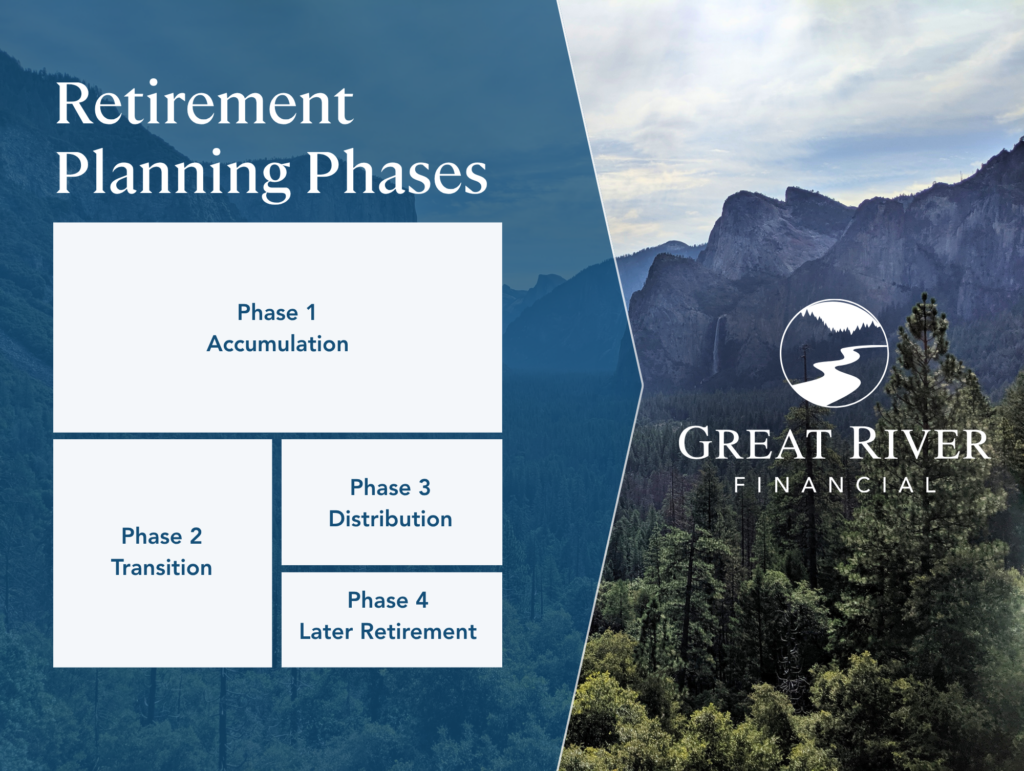
That paralysis happens because retirement doesn’t come with a single checklist. It’s four distinct phases, and trying to use the habits that got you to retirement to get you through retirement is where good savers can sometimes struggle. Knowing which phase you’re in tells you exactly what needs your attention today, and what can wait.
Phase 1: Accumulation
These are the saving years, and they’re the most forgiving stretch. Contribute steadily, keep your money invested for growth, and sidestep the large errors like selling in a downturn or carrying expensive debt.
Time does a lot of the work for you here, and it also cleans up after you. A mediocre year or a fund you should have swapped out sooner isn’t as dire when you have 20 years ahead of you.
That margin for error is what disappears later, which is why I spend so much time telling good savers that the habits that got them here aren’t the same ones that turn savings into income. I wrote more about that in my post “When Good Savings Habits Turn Into Retirement Planning Mistakes.”
Phase 2: Transition
The five or so years on either side of your retirement date carry the highest stakes of any phase, and it’s the one people tend to underestimate.
Three things all hit at once.
- Sequence-of-returns risk: A major downturn in the first few years of withdrawals does damage that the same downturn 20 years later wouldn’t. Identical average returns over 30 years can produce different outcomes depending only on the order of returns.
- Social Security timing: A claiming decision has to be made, and for married couples, it shapes income for as long as either spouse lives.
- Paycheck replacement: You need a system for deciding how much to take, when to take it, and which accounts to draw from.
What sets this window apart is that the decisions often aren’t easily reversible. You can rebalance a portfolio next quarter, but you can’t easily unclaim Social Security or replay your first three years of withdrawals.
Phase 3: Distribution
Early retirement gets called the go-go years, and the name fits.
Health is good, energy is there, and spending often runs higher than it did while you were working. Travel, a project on the house, a trip out to see grandchildren who live three states away.
The focus here is setting a sustainable withdrawal rate, choosing the most tax-efficient drawdown sequence, and building the confidence to actually enjoy the wealth you’ve accumulated. The last point might sound soft but it isn’t.
Careful savers routinely hesitate over a trip they can comfortably afford, because 40 years of treating every dollar as something to keep doesn’t switch off the week you retire. A plan gives you something better than a guess when you’re facing that decision.
Phase 4: Later Retirement
Spending naturally slows in later retirement, and the questions shift again.
Healthcare costs move toward the center. Portfolios and account structures usually want simplifying, partly for your own sake and partly for whoever may need to step in and help someday.
Required minimum distributions (RMDs) from tax-deferred accounts begin at 73 or 75, depending on your birth year, potentially creating larger tax bills if you haven’t planned ahead. Estate and legacy planning also moves from a future consideration to something that needs attention sooner.
Which Phase Are You In?
Many people place themselves in about 10 seconds, and the result is usually transition or early distribution. That’s useful because it sorts the decisions into the ones you can revisit and the ones you can’t.
If you’d like a second opinion on where you are, a 15-minute intro call takes no prep and no commitment. The team at Great River Financial would be happy to talk through it whether or not that leads to working together.
To schedule a meeting or a call, get in touch by calling (763) 231-7581 or emailing info@greatriverfinancial.com.
Frequently Asked Questions
What are the phases of retirement planning?
Retirement planning generally moves through four phases: accumulation (the saving years), transition (roughly five years around your retirement date), distribution (early, active retirement), and later retirement. Each phase calls for a different focus, so identifying yours tells you which decisions need attention now and which can wait.
What’s the difference between the accumulation phase and the distribution phase?
Accumulation focuses on putting money in and letting it grow. Distribution focuses on taking money out without running short. The skills differ: accumulation rewards steady saving and patience through downturns, while distribution depends on withdrawal order, tax planning, and how much you draw each year.
What should I focus on in the five years before I retire?
Those five years carry the highest stakes because several hard-to-reverse decisions land together:
- Social Security timing, including survivor benefits for married couples
- How to turn savings into a regular paycheck
- Positioning your portfolio against a downturn early in retirement
At Great River Financial, this transition is often where the most important retirement planning happens.
About Josh
Josh Wolberg, CFP®, RICP®, MBA, is president and lead financial planner at Great River Financial, a fee-only financial planning firm based in Plymouth, Minnesota, proudly serving clients across Minnesota and nationwide. He began working as an advisor in 2007 to help pre-retirees turn what they’ve saved into a tax-efficient retirement income they can spend with confidence. Josh explains retirement, investments, and taxes through analogies and visuals instead of jargon.